Skip to content

Flight of the Condors

May 14-15, Chivay & Colca Canyon
wpid-wp-1434141540949.jpegWe arrive in Chivay late in the afternoon, after a fairly boring 440 km drive.  A few of us take a soak in the thermal springs known as “La Calera” which are located just a short distance from the town.

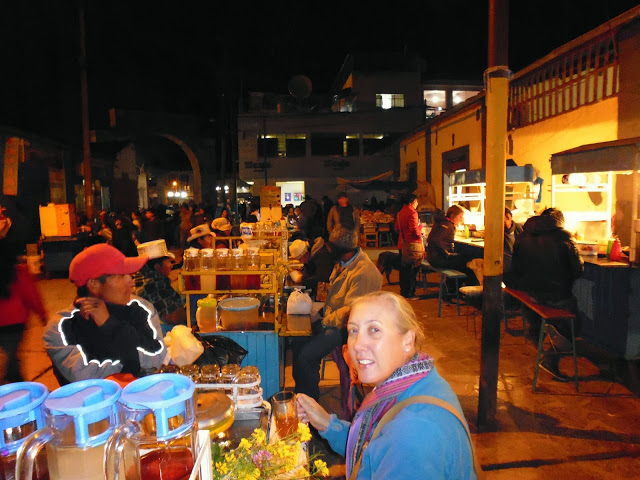
Dinner that night is at the local street market; grilled alpaca, chicken, or pork are all on offer.  The local tea is delightful; is a concoction of herbs, flowers and honey.  It has to be one of the cheapest meals we’ve eaten.

Early the following morning we head to the River Colca which runs from high in the Andes right down to the Pacific.

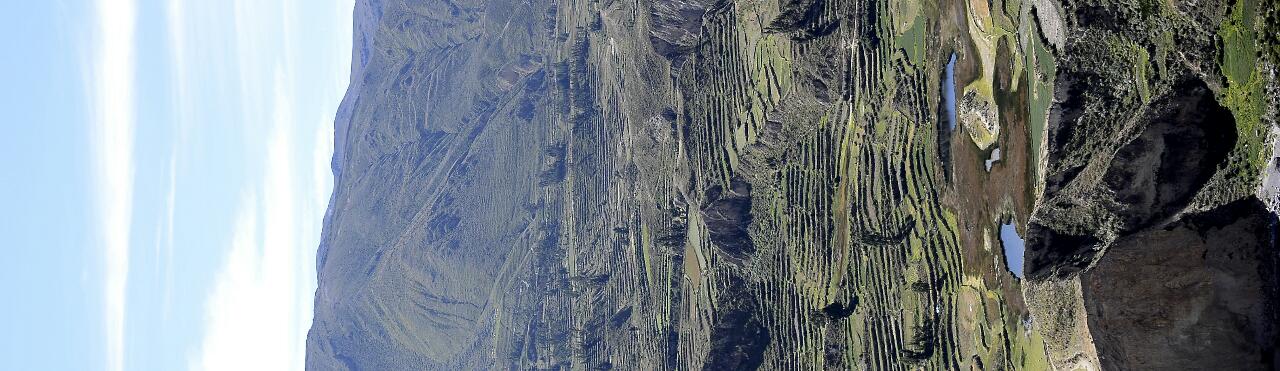
wpid-rps20150612_154325_918.jpgBetween Chivay and Cabanaconde the Colca flows through the bottom of a deep gorge.  The Colca Canyon is twice as deep as the Grand Canyon and claims to be the deepest in the world.

The vista is spectacular, vast Andean terraces tower up over the canyon, dotted by tiny villages that probably haven’t changed in centuries.

The canyon is also renowned as a haven for condors. Each morning they drop from their nest in the rugged cliffs to the valley floor, rising up on the morning thermals scanning for carrion below.

The Condor features throughout South American and has featured throughout history as a symbol of good health and prosperity. Unfortunately, they are declining in numbers as man encroaches on its habitat.

Watching the majestic condor rise from the valley is an incredible site. The tips of their wings spread like fingers controlling the slow graceful ascent high into the morning sun.

They are the largest flying bird, with an average wing span over 3 meters and can expand over 4 meters and weigh around 12 kg.

On the way out of the Canyon we have a panoramic view from the roof of the truck. Aside from the dust, wind and bumpy roads it was great fun sitting up top.

We make a brief stop at a little town on our way out of the Canyon. It’s a bit of a tourist trap and the only reason I mention it is because Don’s patting the Llama, who then turns around and spits in my face – charming!

Raqchi Homestay

May 13, Raqchi
Raqchi is a small village situated a short distance outside of Cuzco.

Well known for its talented craftspeople and the beautiful handmade and intricately decorated pottery that is made here.

Tonight we are the house guests of the local village families, staying in their traditional houses (though modernised to include comfortable, but basic amenities).

We are warmly greeted by the villagers dressed in traditional clothing. Our group is divided amongst the families; Don & I, along with Gusta and Greta, are staying together with Papa Leonardis.

Papa Leonardis speaks only native Quechua and Spanish, but through hand gestures, our simple Spanish and lots of smiling, we managed to communicate (a little).

The first activity is lunch.  Papa Leonardis walks us back to his place.  It’s a simple structure; a three-sided building, with a courtyard in the middle.

Don and I are downstairs and Greta and Gusta upstairs.  We share a bathroom, which is clean and basic (though we all opt out on trying the shower – not too sure it would be a very a hot one!).

We are ushered into a tiny (and I mean tiny) kitchen.  The four of us squeeze around a table and Leonardis serves us a simple, but plentiful lunch: ceviche salad, quinoa soup, lamb with potatoes and maize (gigantic corn) and fresh fruit to finish.

In the afternoon we meet up with the group to explore the ruins.  Raqchi was an important destination for the Incas with one of the largest temple ruins located here.

The Temple of Wiracocha stood over 20 meters high and was one of the tallest Inca structures built, consisting of the usual intricate Inca stonework and part adobe bricks.

There are also a number of surrounding quarters, most likely for high priests, and 152 round qullqas (storehouses) built in parallel lines, each measuring some 10 metres (33 ft) in diameter. The round shape makes these qullqas unique amongst other Inca structure.

These storehouses were used to hold grains, such as corn and quinoa, that would have been used for ceremonial purposes and general storage for the village.

Dinner tonight is corn soup, plus chicken served with maize and potato.  After dinner, Papa Leonardis has a surprise.  He brings out a collection of traditional outfits for each of us.  The women don skirts, jackets and hats; Don a poncho and a chullos (woolen beanie).

We all gather in the courtyard of one of the larger houses and participate in a ceremony to give thanks to the local spirits.  The evening culminates with singing and everyone up dancing.

Overall, it’s a humbling experience to spend a night with the local people of Raqchi. It’s a real insight into Peruvian customs and culture, along with the day to day lives these people lead.

It’s easy to describe the experience as charmingly rustic, but I’m not sure that would be my description if it was my day to day reality.

This slideshow requires JavaScript.

Machu Picchu & Cuzco

4 -5 May, Cuzco
Tucked away on a beautiful peninsula overlooking Lake Umayo are the ruins of Sillustani, our first stop after leaving Puno.

Built by a pre-Inca civilisation hundreds of years ago, the Sillustani Indians built several “Chullpas”; funeral towers whose construction is far more complex than anything the Inca people ever built.

Each tower would have contained the remains of noble men, buried together with offerings to secure their comfortable passage into the next life.

After exploring the ruins it’s back to the truck for a 440km drive to Cuzco.

On arrival into Cuzco we have a quick shower before heading out to the Fallen Angel restaurant for a group dinner.

This results in a rather late night (though I think we were the first to depart for bed), the effects of alcohol mixed with altitude (we are at 3,450m) take their toll on most of the gang, including us!

The Cuzco region is the heart and soul of Peru. The city itself is the continent’s oldest continuously inhabited city and was the home of the Incas for two centuries before the Spanish built their first capital here.

Steeped in history, tradition and legend, Cuzco is a fascinating mix of both cultures. Inca-built walls line the central streets and many of the elegant colonial buildings are built on or around Inca foundations.

There are five of us not doing a Machu Picchu hike and we will have plenty of time to explore the town, with its cobblestone streets that lead to many Baroque churches and ancient temples.

6 May, Sacred Valley
The Sacsayhuman ruins are located just outside the city. These ruins are best known for the gigantic blocks that make up the zigzag frontal of this fort-like construction.

The ancient monolithic stonework is unique. There is much speculation as to how the stonemasons of the time could fit the irregular shapes together, without the use of mortar. It’s the perfect jigsaw.

The largest blocks could weight over 120 metric tons and stand over 8 metres in height.

There are many theories as to why Sacsayhuaman was originally built and what it was used for, but the most likely is that it was a temple complex where offerings were made to appease the gods.

We then head into the Sacred Valley with a quick stop at an animal sanctuary, before we reach the mountainside ruins of ancient Pisac.

Most notable are the curving agricultural terraces stretching down the hillside providing a sweeping vista of the valley below.

The religious buildings in particular are as finely made as those at Machu Picchu, and the site features one of Peru’s only remaining intihuatanas, enigmatic carved rocks that were used for astronomical observation.

wpid-wp-1433448142462.jpeg

Pisac Markets

The current town of Pisac is now located beneath the ruins and hosts a popular artisanal market, so we venture down for a bit of shopping.

Our Lunch is at Alhambra Hacienda in the small town of Urubamba.

I’m not normally a fan of a buffet, but this one is exceptional, with much of the ingredients grown on the property.
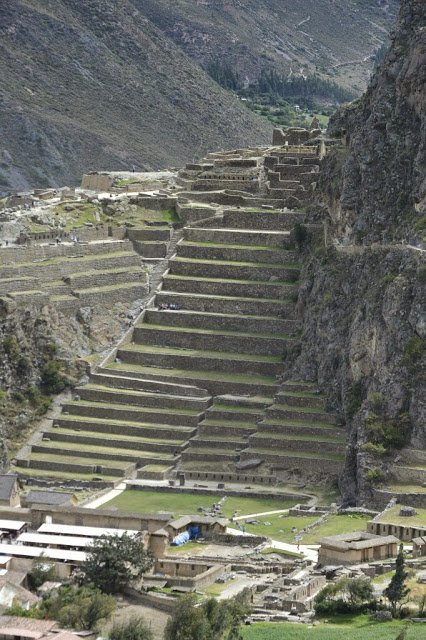
Ollantaytambo Ruins

Ollantaytambo Ruins

In 1536, the settlement of Ollantaytambo was the site of the Inca’s greatest military victory over the invading Spaniards.

Today, it is one of the only towns in Peru that retains its original Inca walls and street grid, dominated by long, ancient stone walls that once divided groups of homes around communal courtyards.

An imposing set of stone terraces (from which the Inca assaulted their Spanish invaders with slingshots and arrows), capped by six enigmatic slabs of pink granite, looms above the town.

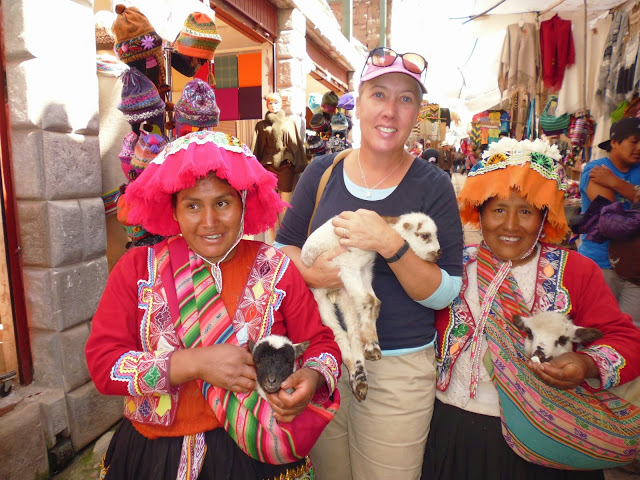
Our final stop for the day is in the village of Chinchero at a women’s community textile project. The women are dressed in traditional clothing and speaking native Quechua.

We are welcomed with tea and shown how they spin, thread, weave and dye the wool with natural dyes, using ancient techniques.

The quality of work is the best we’ve seen in this part of the world; the fine baby alpaca products were beautiful.

Alas, our pockets were nearly empty and whilst I could have purchased much more, Don acquired a jumper. I’ll just have to find an excuse to go back one day!

7-8 May, Cuzco
Left to our own devices for the next two days, we spend our time relaxing and exploring more of Cuzco.

Our daily adventures begin with breakfast at Jacks Cafe Cusco, the best coffee we have had in South America. Not surprisingly, it’s run by an Australian.

The city offers free (tip based) walking tours each day. There are a number of guides touting for business and we end up with our own private guide for two hours exploring the city.

Our best adventure would be in search of wine. Reasonable quality wine is hard to find, especially outside the mass produced supermarket brands such as Fronterra and Casillero del Diablo, which we are all too familiar with.

On the way into town, the truck had passed a wine shop. Back tracking the route was not so easy. Carmen had had a little difficulty navigating through Cuzco to our hotel.

Starting at the Mercado San Pedro, the usual spectacle of freshly butchered meats and fresh produce, we can’t go past a freshly squeezed juice – a mix of strawberry, bananas, kiwifruit and who know what for 6 sol (AUS$2.70). My cup was topped up three times from the blender.

Our efforts paid off. We found the one and only liquor store in Cuzco which had a good range of wine at reasonable prices. We also haggled for a ‘special-price’ for a dozen.

With our box of wine in hand, we hailed a taxi, who asked for 5 sol (AUS$2.30). This is probably overpaying, but reasonable to us. As seems to often be the case, we also went via the petrol station and filled-up, with the engine still running!

When we got out, I noted the car had no taxi markings whatsoever. We’d jumped into a random car, with the driver out to make 5 sol!

This slideshow requires JavaScript.

9 May, Ollantaytambo
Today we head back to Ollantaytambo to meet our hiking companions. We will spend the night in the town, leaving only a 2 hour train journey the following day to Machu Picchu.

Don and I take a hike up to the Pinkulluna ruins, the climb is steep, but the view back over the town is worth it.

10 May, Machu Picchu
An early train to Aguas Calientes allows us to get to Machu Picchu before the trains from Cusco arrive and be ahead of the crowd.

The train trip provides for some spectacular scenery as it winds deep into the Andes.  The vegetation grows thick and wild as we follow the Urubamba River and the towering mountain peaks disappear into the clouds.

Machu Picchu has been a long anticipated highlight and it does not disappoint.  It is one of those genuinely magical places, and catching your first glimpse of the lost city is definitely a moment you never forget.

The ruins of this forgotten city are stunningly located, perched high on a rocky escarpment, surrounded by verdant cloud forest, with the river running through the gorge far below.

Hidden away, Machu Picchu is invisible from below, so it’s no surprise its ruins remained a secret for so many years.

Discovered in 1911 by the explorer Hiram Bingham, although the ruins were heavily covered by dense jungle foliage, many of the buildings were well preserved and in excellent condition.

Historians believe the city was probably completely self-contained, surrounded by agricultural terraces sufficient to feed all it’s inhabitants and watered by natural springs.

It’s thought that the city was the location of a royal palace and estate, home to the Inca Emperors, or possibly a sacred religious and ceremonial sight.

The city consists of more than 200 buildings, from houses to temples, storage buildings and public spaces. It’s fascinating to be able to gaze down on the city from above and imagine how it would have looked during the height of the Inca empire.

This slideshow requires JavaScript.


Note: I contained myself with the number of photos (more available upon request)!

12 May, Cuzco
Back in Cuzco for the last day we tick off some more historic sites and museums (after breakfast at Jack’s, of course).

The Church of Santo Domingo is built on the site of one of the most important temples of the Inca Empire. Qurikancha, the temple of the Sun God, would have been the most prominent temple and astronomical observatory in Cuzco.

The carved granite walls were once covered in gold, its courtyard filled with golden life-size sculptures of animals, even the temple floor was covered in solid gold.  All, until pillaged by the Spanish conquistadors.

The Spanish demolished most of the temple to build the current Church on its foundations, using the Inca stonework in its construction.

A credit to Inca stone masonry and architectural design with its unique interlocking design, has been its ability to withstand the test of time and several severe earthquakes.

Our tickets also included the Convent of Santa Catalina, so why not…

In Inca times the most beautiful and virtuous noblewomen where selected to live in Acllawasi and devoted their lives to the Sun God. They weaved clothes for ceremonial purposes and assisted in religious ceremonies.

Upon the Spanish occupation of Cuzco, a convent was founded on the same site in 1601.

The Museo Machu Picchu is a must-see.  It is dedicated to preserving the history of Machu Picchu and houses over 4,000 artifacts, including some 366 objects that have been returned by Yale University in recent times (they really should return everything). I’m tempted to say more, but will bite my tongue.

As far as museums go, this one has done a pretty good job at telling its story.

A video starts you of with the history of and there are little videos aligned with displays throughout.

Enough culture for one day, we meet up with some of the gang to enjoy happy hour cocktails at Fallen Angel.

Don & I limit our cocktail intake (not wanting a repeat of night 1). We’ve decided to treat ourselves with dinner at Le Soleil, a French restaurant with a great reputation.  And it was a superb meal.

This slideshow requires JavaScript.

13 May, Departing Cuzco
We are heading out at 8:00am. Lucky for us, Jack’s opens at 7:30, so we have time to get down there and grab our last coffee before we go.

We pass Tige and Lewis on the way, who also put in take-out orders.

I have to make a quick visit to the Cathedral, which I have so far failed to do – only because I refuse to pay to go into a church (refer to Sienna).  If you arrive before 9:00am its free.

The Spanish made a habit of building on top of Inca places of significance, this site had previously been the Inca Viracocha’s palace.

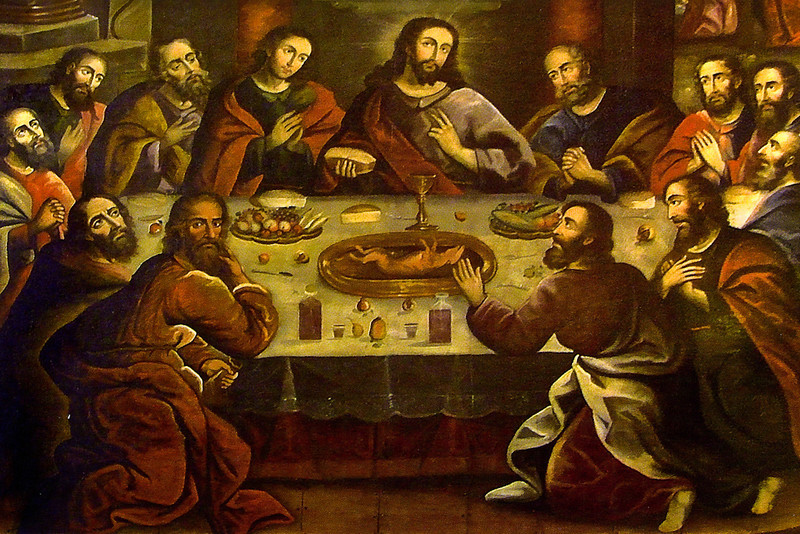
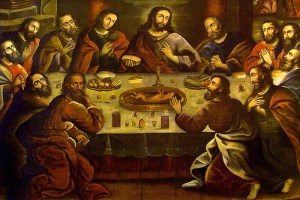
Whilst its renowned for its colonial art, my main purpose is to view the painting of the Last Supper.

It’s not much different than any other depiction, except for what the Apostles are feasting on: Andean fruits and…..is that a guinea pig?
wpid-peru-0040g-04-04-catedral002-l.jpg

Intrepid Travels Begin – La Paz to Bolivia

30 April, La Paz
Today we join our Intrepid tour from La Paz to Lima. The tour is actually run by Dragoman, who specialise in overland travel through South America.

The trip begins with a group meeting at 6pm in our hotel.  Our fearless tour leader is Rich, with driving support from Tige and Jez, who is on his maiden voyage as a trainee.

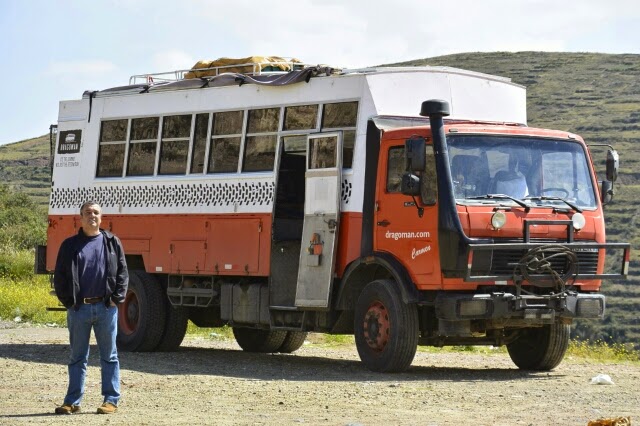
Our transport for 21 days will be ‘Carmen’. Tige points out that it’s a truck, not a bus, and we are not to insult Carmen by calling her the later.

We are joining Carmen on a small part of her 96 day journey, a voyage which began in Rio in February and will end in June at Cartegena.

Some of the passengers have been onboard since the beginning or for much of the trip: Michelle, Aynslie, Lisa, Manju, Birgit and Mary.

wpid-wp-1433125140418.jpeg

Carmen & Don

Then there is Donna, Courtney and Michael, who have previously done a leg on Carmen before jumping off and are rejoining again in La Paz.

Lewis was leaving the trip in La Paz, then decided to extend his holiday, which resulted in having to quit his job to stay on to Lima.

That leaves 9 newbies eagerly ready to jump on in La Paz; Greta and Agusta, Julia, Sarah, Bob, Matt, Kyle and the two of us.

Once introductions are made, paper work completed and instructions given for our morning departure, those who are up for it head out to dinner.

1 May, Copacabana
It’s an early 7:00am departure, in the hope of escaping the traffic chaos of La Paz – which is only somewhat of a success.  We have 200km to cover to reach Copacabana.

It happens to be the Fiesta de la Cruz and there are celebrations Countrywide. We hit a procession on the outskirts of La Paz which makes navigating the potholes, crazy traffic and a crowd of people walking down the middle of the road, slow going.

Copacabana is a picturesque town on the shores of Lake Titicaca with an impressive Moorish-style cathedral. On Sundays the town fills with the faithful believers who walk up Cerro Calvario (the hill guarding the town) to make their dreams come true.

At the top of the hill numerous stalls sell all manner of miniature material goods from cars and buses through to houses and graduation certificates. The selected items are taken to a small altar where they are blessed, decorated with flowers and petals, incense is burnt and finally beer is sprayed over the whole ensemble.

A fascinating insight into local beliefs, as is the blessing of the vehicles in front of the cathedral. Thanks to the trip notes for that little insight.

Copacabana takes its celebrations seriously and this is a big weekend, not only is it the Fiesta de la Cruz, it’s also the Fiesta de la Chakana (Southern Cross) and the town turns the two festivals into a non-stop party for four days.

We arrive early afternoon as things are getting started. With streets blocked off we have to abandon the truck and walk into the town square.

Endless dance troops are parading by; each with their own band and elaborate colourful costumes, including fabulous masks and head-dresses.

The atmosphere is fun and lively, people young and old celebrating throught the town and who later invite us to join in.

Pacena (a Bolivian beer) are clearly supporting the event, handing out free beer to the parade participants – this keeps the party spirit going and by the end of the night, there are a lot of intoxicated Bolivians around town.

The celebrations go through to the early hours of morning, including a party outside our room until about 3am.

This slideshow requires JavaScript.

2 May, Copacabana
A little weary from the lack of sleep, we board a boat out to the historic Isla del Sol on Lake Titicaca for a 14km hike.

Inca mythology claims the island is believed to be the the birthplace of the sun and where the bearded white god Viracocha and the first Incas made their mystical appearances.

Even today Aymara and Quechua people in Bolivia and Peru still accept the legend of the sun being born on this island as their creation story.

There are a host of ancient ruins dotted across the island, along with tiny traditional villages and walking trails. There are no cars, Llamas and donkeys provide the transportation.

This slideshow requires JavaScript.

3 May: Lake Titicaca/Puno
Another 200 km drive takes us across the Peruvian border to the lakeside town of Puno.

Puno is a melting pot of Aymara and Quechuan Indian culture and traditional Andean customs are still strongly represented here. The town is known as the folklore capital of Peru and is famous for its many festivals and traditional dances.

Don and I find lunch at the local market close to where we are staying. Amongst freshly butchered meat (with roaming dogs hopeful for scraps) are stalls cooking up lunch, serving you at communal laminated tables.

We must have been looking hungry since a women at one of the food stalls ushers us with a friendly smile to sit down. We order the pollo lunch special at a costly AUS$5 for two.

It includes a huge bowl of soup, which itself would have been enough, followed by grilled chicken, rice and potatoes and a cup of sweet mint-like ‘mate’ tea, which I’ve now discovered is considered carcinogenic!

In the afternoon the Carmen gang participate in a friendly tuk-tuk race from the hotel to the port. After having the lead the race, it was clear our man had peaked early; we came a respectable third.

We board a boat to the floating reed islands of Uros on Lake Titicaca.

The Uros tribe warmly greet us and give a glimpse into what their lives on the reed islands are like, demonstrating how the islands are made and how they live.  Then they delight in dressing us up in traditional clothes.

The Uros tribe pre-dates the Inca civilisation. According to legends they were superior beings, existing before the sun, when the earth was dark and cold. They were impervious to drowning and being struck by lightning until they fell from grace by disobeying a universal order and mixed with humans.

The tribe scattered, lost their identity, language and customs. Today the are known as the Uro-Aymaras, and now speak Aymara.

There are about 40 islands on Lake Titicaca made and re-made from the totira reeds which grow in the lake.

The reeds are essential to their existence, providing land and shelter, sustenance and transportation for the residential Uros tribe.

There existence is a precarious one; the reeds rot and constantly need replacing. Once dry they are susceptible to fire. Drowning is sadly a common occurrence, especially young children. The climate is harsh: cold, windy and at an altitude of over 3,800 meters, the sun can burn fiercely.

Yet they have endured centuries and outlasted the mighty Inca civilisation.

Alasitas are miniature that represent the desires and wishes of people and the Alasitas Market is on the night we are in Puno.

The crowded alleys are lined with stalls selling everything imaginable: husbands, wifes, houses, university diplomas and suitcases of money.

Our highlight was dinner – streets stalls roasting everything from guinea-pig to pork and lamb and we skip the guinea-pig, but devour a succulent meal of pork and lamb.

This slideshow requires JavaScript.

The Bowler Hats of La Paz

Our Intrepid tour begins at dizzying heights in La Paz, Bolivia.

The city sits at 3,660 meters above sea level and the airport at a little over 4,000 meters is one of the highest in the world.

After a long day commuting from Panama via Lima, we finally arrive at our La Paz hotel around 3:30am in the morning.

It’s a good thing we’ve arrived a few days before our tour starts, because it’s impossible to avoid some level of altitude sickness.  We struggle through nausea, headaches and insomnia (a very foreign concept to me).

Of course, I take longer to acclimatise than Don. Every morning I wake up feeling like I have a wicked hangover (not that I’ve ever had one of those!).  It takes a good coffee and few hours to feel somewhat normal, only for the headache and insomnia to kick-in again at night.

By the way, if you are looking for a good coffee in La Paz, we can recommend Café del Mundo, it does a great breakfast as well.

La Paz is cradled within a steep canyon where the altitude varies 900 meters. Poorly constructed houses cling to the canyon walls.

Just when you think your adapating to the thinner air, a hike up a steep hill, or some stairs (which in La Paz is unavoidable) reminds you that you’ve still got a long way to go.

After Costa Rica and Panama we are charmed by the chaos and disorder of La Paz.  This is one of the fastest growing cities in South America.  The streets are hustle and bustle, filled with cars and people.

The most striking feature of the women in La Paz is the proudly worn bowler hat.  It perches precariously on top of their heads and is an odd addition to the brightly embroidered skirts with layers of petticoats and colourful shawls.

Apparently the bowler hat was introduced in the late 1800s when a shipment of hats sent to English residents was too small.  The English donated the hats to the indigenous Aymara’s.

The hats are now ubiquitous with the Aymara women.  Whilst they provide no protection from sun or rain, they are worn proudly. It is believed that women who wear the bowler hat have good fertility.

We even managed to explore a few Museums during our three days:

The Museo de Instrumentos Musicales de Bolivia, is quirky, fun and cheap.  It has an extensive collection of national instruments and from other parts of the world.

The Museo Nacional de Enthnography and Folklore has a wonderful display of traditional textiles, pottery and my favourite was the ceremonial masks.

The Church of San Francisco was constructed in various phases between 1743 – 1885.  It is considered one of the finest examples of spanish architecture and features artwork by Spanish and indigenous artists, in a style refered to as baroque mestizo.

A guide is provided for free (tips basis), who shows us around and takes us up the bell tower where we have spectacular views over the city.

Perhaps the most interesting was the Coco Museum which provides an in-depth insight into the history of cocaine.  So much I didn’t know (and probably didn’t need to know).

There is evidence that the Coca leaf has been used by humans since 2,500 BC. The leaf was, and is, mainly chewed or steeped into a tea.  Rich in nutrients it has many medicinal purposes related to respiratory and digestive ailments. It actually takes intensive processing to produce cocaine from the coca leave.

The import of coca leaves into the US is illegal, unless you are Coca-Cola.  In 1922 the USA banned cocaine imports, but granted Coke an exception.

The company still uses the coca leaves in its secret recipe.  Originally the formula included a small amount of cocaine, but today the cocaine element is removed.

This slideshow requires JavaScript.