Skip to content

Panama

Panama city is an interesting mix of spanish colonial architecture back-dropped with modern high-rises and surrounded by urban slums

Whilst I would say the city is not the most exciting place to spend a week, we manage to keep ourselves occupied.

We found a lovely one bedroom apartment in Amador Heights through Pattys Casitas. The apartment was in a great location, easy access to everything via taxis, which are cheap.

Included in the apartment are two bikes, so we cycled along the Amador Causeway , which links four small islands. The causeway was built as a breakwater from rocks excavated during the building of the canal.

In 1671 the original Spanish settlement of Panama Viejo was destroyed by pirates.  As a result they moved to a more defendable location called San Felip, now know as Casco Viejo.

The old town of Casco Viejo shares similar spanish colonial architecture with Old Havana, Cuba.  Likewise, both had been left to decay into urban slums.

Now, like old Havana, Casco Viejo is undergoing significant restoration to return the town to its former glory.  Casco Viejo is small in comparison and renovation work is going on at a frenzied pace.

The cobblestone streets, spanish mansions and iron lamp posts are a stark contrast to the conglomeration of high-rises looming across the bay. You could easily mistake yourself for being in Dubai, or Hong Kong.

Further contrast are the urban slums bordering Casco Viejo. We lock the taxi doors as we drive through and Patty had warned us to not walk through these neighbourhoods.

Reprosa is a local jewelry business making replicas of ancient huacas; sacred ornaments handcrafted in pre-Columbian times.

Using the traditional techniques of the ancient goldsmiths, casting pieces in gold and silver.

Our private tour with Monica starts with a history lesson and a traditional drink consisting of Guava and Pineapple juice with a dash of rum. It was an interesting tour and included some retail therapy in the factory gift shop.

Within walking distance of our apartment was the Frank Gehry Biodiversity Museum. A US$90 million project, it opened in 2014. Acclaimed as an architectural triumph, I’d say the Guggenheim in Bilbao is more impressive.
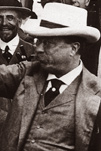
wpid-teddy_roosevelt.jpgWe are tempted to purchase a Panama Hat, only to discover they are in fact made in Ecuador.

The name was coined when President Roosevelt was photographed wearing the hat he had been given on a trip to inspect the Canal. The media referred to it as his ‘Panama Hat’ and so the name began. We might wait until we’re in Ecuador.

Of course, the main attraction of Panama City is one of the 7 wonders of the modern world, an incredible engineering accomplishment – the Panama Canal.

A few interesting facts:

  • The Canal was originally conceived by the French in 1882 – they went broke and lost over 20,000 lives trying to dig their way through.
  • The Canal Zone was acquired by the United States under a perpetual lease in 1904 and American engineers proposed the lock system.
  • The three locks in the canal raises a ship 26 meters to the man-made Gatun Lake.
  • There is a 20cm difference between the Atlantic and Pacific sea levels, the latter being the higher.
  • The first ship passed through the canal in September 1913.
  • The length of the Canal is 82 km, on average it takes 8-10 hours to navigate end to end.
  • About 40 ships pass through the canal daily.
  • The average toll paid per ship is between US$300K to $400K (around $5 billion per year).
  • President Carter signed a treaty in 1977 to give Panama control of the Canal.

And there ends our week in Panama City.

This slideshow requires JavaScript.

It could be paradise…

Bocas is a hidden gem.

It’s one of those places I really don’t want to tell you about, for fear of encouraging people to visit.

Though, it’s probably not under threat, because it’s not all that easy to get to.

We flew in a little 18 seater twin-prop from San Jose, directly onto Isla Colon, scattering the crabs infesting the runway, as we land.

Nature Air allows 40 lbs (18 kg) each of check-in and 10 lbs (4.5 kg) for carry-on. There is also a maximum passenger weight: if you exceed 250 lbs (113 kg), which I think we are safe on, you must purchase an additional ticket.

We had fastidiously packed in the morning to ensure we avoid paying excess baggage charges. Don’s wearing his ‘heavy’ items; jeans, chunky shoes and is ready to add layers if required to reduce luggage weight.

We needn’t have worried. Our check-in baggage is under the limit and they weigh us holding our hand luggage; as long as your total weight doesn’t go over the 250 lbs they’re not concerned.

This is an international airport and as small as it is, they even have a resident sniffer dog. Once he’s checked over the luggage he goes back to playing catch with his handler.

It’s a short ride to the dock at Bocas Town. Here we jump into a water taxi for a $2 trip across to Isla Carenero.

From the dock at Bocas we can see across the water to our accommodation; the brightly painted blue and white, two story clapboard house. It sits on stilts over the clear tropical waters of the Caribbean.

The water taxi drops us off on the private jetty of Casa Acuario.

Our room is the cheapest of the 7; the one at the back, but it’s lovely bohemian-style luxury.  Luxury for us, that is.

A large room with an eclectic array of furnishings, more importantly an air-conditioner, ceiling fan and our own bathroom (of course).

When I clean my teeth, I can see straight down the drain to the water below. The shower is the same. We inspect the toilet plumbing, just to make sure it doesn’t go the same way – with relief, we can see it leads to the septic tanks.

Casa Acuario is comfortable, convenient and has good WiFi.  It was lovely being over the water, listening to the lapping of the sea. Each morning there is a pot of coffee for guests, though, like most places, fresh milk is not on the agenda, so we bought our own.

Long-life milk is one of Don’s pet hates. So much so, that we order a latte at a cafe on Bocas and he goes and buys them fresh milk to use.

Most afternoons it rains, a torrential down pour which continues through the night. The wet season has arrived early and the first few days were dreadful (though I used the time to catch-up on the blog).  We considered leaving early, but persevered and the weather did get better.

The original plan was to move from island to island, the Bocas del Toro archipelago consists of 9 main islands. From what we seen of Isla Colon and Isla Bastimentos we decided we couldn’t improve on where we were.

The further away from Isla Colon you go, the less infrastructure there is. Most of the outer islands don’t have a lot of accommodation options aside from luxury resorts.

Isla Carenero exudes an idyllic chilled back vibe. It has the right balance; a few places to eat and a short stroll to a beautiful palm-shaded beach. And, we can easily pop across to Bocas for more dinner options and supplies.

The variety and quality of restaurants was surprisingly good, especially the fresh seafood; ceviche, snapper and octopus.  No lobsters though, or there shouldn’t be!

Due to over fishing, there has been a significant depletion of lobster in the area.  There is a seasonal ban from March to June, in the hope of giving them some breeding space.

A popular spot in Bocas Town is Raw Fusion, a sushi bar which we visit for happy hour one evening.  Aside from feasting on the daily specials, which included sweet chili chicken, tempura calamari and octopus ceviche, we chatted with the couple at the table next to us.

Bill and Kelli are a fun and inspiring pair.  They’ve recently moved from Colorado to Costa Rica with their 3 children.  The youngest, only months old, was born there. They previously lived in Romania for two years, working with orphaned children.

They are the sort of couple who are going to ensure life is full of adventure, not afraid to do something different. I hope we cross paths with them again.

Red Frog beach is one spot that people raved about and while it’s lovely, we preferred the beach on Carenero.

The Bocas locals are friendly and happy people, the children wave and shout “hola”.  A pair of cheeky young boys accept Don’s to help them climb a tree to pick fruit.

But, as idyllic as Bocas del Toro appears, there is a down side; it’s the rubbish.

Circumnavigating the island one day, we walk through the squalor, poverty and filth the locals live in.  It’s no different on the other islands.

These islands are not unique. It’s a sad reflection on many parts of the world that lack the concern, motivation and the resources to deal with the issue.

Resort owners, researchers (looking at the damage to the reef) and environmentalists are voicing concerns, the government does not seem to be listening.

I hope it does before it’s too late; this place could be paradise.

This slideshow requires JavaScript.

Costa Rica

We had low expectations for San Jose; everything you read says it’s nothing spectacular. And it wasn’t!

Starting life as a coffee trading outpost, San Jose is struggling with rapid urbanisation and migration.

Native Costa Ricans and increasingly Nicaraguans are seeking a better life in the countries capital – not always successfully.

On first impression San Jose appears dirty, chaotic and charmless.

But, I think it’s the sort of place you need to spend time in, to uncover it’s secrets and charms.

Our stay was made all the nicer at Casa Abierta, a place I found on AirBNB. A lovely urban oasis, well located within walking distance to the city centre, with a range of restaurants to choose from just a few streets away.

Our host, Darrylle was delightful. Stories of his adventurous life that led him to Costa Rica provides for great conversation, along with his passion for travel and outlook on life.

Don found a barber at the nearby mall and for COL$4,000 (AUS$8) he is once again sporting a crew cut.

On our last night we randomly pick a place called PRAIA Seafood & Raw Bar, for dinner. Eric, chef and owner, explains they had just opened and he warmly welcomed two Australians for dinner.

A complimentary plate of Octopus Ceviche was melt-in-your-mouth delicious. Don followed up with grilled Octopus, I the seafood risotto.

I hope they do well, it was the best meal we had in San Jose.

Finca Luna Nueva is set in the Central Highlands of Costa Rica, on the edge of the Children’s Eternal Rainforest.

Steven Farrell, moved from the US and established a small organic Turmeric and Ginger farm in 1994.

Today he has over 200 acres of bio-dynamic farming, including one of the worlds largest medicinal herb gardens.

On a tour of the farm Steve encourages us to try plant leaves that taste like peanuts, followed by berries that magically turn sour things sweet.

He points out a hive of Melapona (stingless) bees, this breed apparently provides greater nutritional/health benefits than regular bees – a ‘superfood’.

I’m going to take a little detour here.

I thought I should check on the definition of a ‘superfood’, since I’m guilty as many are of throwing it around in conversation.

Superfood, I discover, is simply a marketing term.

It broadly covers a food item with health benefits….would that not cover a lot of things? Isn’t just eating fresh, natural food generally healthy?

There is no scientific or legal definition of a ‘superfood’ and, interestingly, the EU banned the use of the term in 2007, unless the product has supporting evidence.

I couldn’t find any product that has produced the supporting evidence.

So, back to the farm. Our cabin is set in amongst the lush jungle greenery. Each morning we wake to natures orchestra; the tweeting of birds, chirping of grasshoppers and cicadas, oh and we are never far from a roster crowing (well before sunrise).

The volume peaks again at sunset when the jungle orchestra farewells the day.  We sit on our balcony, red wine in hand, and just listen.

Cloud Forest
We’ve spent the Easter weekend in the mountains, wanting to avoid the coastal crush that apparently occurs.

Heading for the coast, we travel via Santa Elena. The road is renowned for its bad conditions, like much of Costa Rica.

However, this area has a reputation; it was an article in 1983 from National Geographic that put Monteverde/Santa Elena on the tourist map and in an attempt to discouage tourists, the residents have lobbyed against paving of the road.

I don’t think it worked; Monteverde is described as “Costa Rican’s Disneyland in Birkenstocks”. Santa Elena is a bit more laid back, because it’s a bit more difficult to get to.

Having done our homework, we rented a 4WD and when we hit the turn off to Santa Elena, we know why. Unsealed, uneven and deep pot holes make for a slow trip.

Just outside Santa Elena is Selvatura Adventure Park where we take the 3km Canopy walk through the Cloud Forest.

What’s a cloud forest? The main difference between a cloud forest and a rainforest is elevation. Cloud forests are at higher altidues, hence the name. Though they can still be quiet humid.

Nicoya Peninsula
The main road in Costa Rica is the Pan American Highway, although I’m not sure how a single lane road gets to be called a highway?  Maybe, just being a paved road warrants the term highway in Costa Rica?

The traffic is bumper to bumper for kilometers – in the opposite direction. This is the Easter traffic heading home.

Our first destination is Playa Grande; two nights at the Playa Grande Surf Camp. No, we are not taking up surfing, it just happens to be close to the beach and has a swimming pool.

Our accommodation is a basic little A-frame with a rattly air conditioner. It’s so hot and humid, you couldn’t sleep without it.

Out comes the duct tape (an essential travel item) – I tape down parts of the air-con to reduce the rattle – it works.

Playa Grande is a laid back surfie-oriented town. It has a beautiful long stretch of beach, perfect for surfing.

The area is a protected leatherback sea turtle nesting spot and as such, there is no infastrucutre allowed on the beaches.

Whilst the beach was lovely, there was no shade and we need shade.

20 kilometers up the road from Playa Grande is Las Catalinas, where we spend a day lazing in a hammock.  It’s a designer beach town, the dream of two Americans with a lot of money!

The dream town was launched in 2007, just as the global financial crises hit and development has been slow.

Playa Samara
Heading south along the coast, we find ourselves at Playa Samara.  It’s the perfect spot: beautiful beach and there’s shade!

For US$50 a night (cash of course) we find a room at the beachfront property Locanda, with its own sunlounges.

The room is spacious, the bathroom not so much. You need to step into the shower to shut the door. I don’t think the shower ever got hot, but that didn’t worry us.

We quickly establish our routine: wake-up, drop towel on preferred sun lounge, early morning stroll/swim, return to selected sun lounge, order coffee and settle in for the day.

Have you ever heard a Howler Monkey? I thought there was an old Rottweiler with a hoarse throat outside.

The deep gutteral cry is from six or more Howler Monkeys hanging in the trees outside our room.

This slideshow requires JavaScript.

Santa Teresa
Located on the southwestern corner of the peninsula, access to Santa Teresa is a rough ride.  Again, the 4WD earns it’s keep.

Santa Teresa is another surfers haven.  It’s easy access from San Jose makes it a popular destination and it has a reputation for being a bit of an expat escape.

We spend two nights here before taking the ferry back to across to Puntarenas, staying on the edge of San Jose, ready for our departure to Panama.

But wait….there’s more!

Australia
It’s an odd feeling knowing you are home, but not home.

Being a temporary visitor in the places you know so well.  Slipping back into the lives of family and friends, but only briefly.

Short it is. We spend our time between Sydney and Melbourne, catching up with as many people as we can.

Even with four weeks in Australia, we missed touching base with many of you. But, we will be back (for good this time) in December.

We know we have a once in a lifetime opportunity to see the world. Not that we won’t continue to travel.

If all goes to plan, we will both be back earning corporate dollars, paying off the mortgage and a new four legged addition at our feet, planning the next adventure, though within the confines of accumulated annual leave.

But, right now, we have no jobs, no responsibility to keep us in Australia.  Outside of missing family and friends…but hey you can’t complain – we’re on skype.

Why more?
Was the question everyone asked.

Well, it looks like we’ve seen a lot, but really we’ve seen so little.

We didn’t start our travels with a strict bucket list.  Our philosophy was to go places and do things we probably wouldn’t be interested in, or so capable of, in later years.

Our basic travel premise has been: “quality rather than quantity”. What we see, we want to see well.

Once we started our travels, the list of destinations began to shrink; this wasn’t going to be 21 countries in 21 days.

A 2015 tour began to evolve.  Even this itinerary does not tick all the places in the world we want to go, but achieves a few unique ones.

Here we go again
March 25th we board the Qantas A380 bound for Dallas (again). The Hilsabecks graciously host us once more.

We have a few days with them before flying off to Coast Rica where the 2015 adventure begins!

349 Days

One Year done.  Actually, it’s been a total of 49 weeks and 6 days since we left Australia – close enough to call it a year.

We’ve covered 20 countries on 3 continents; some only got a brief look in as we passed through, others were explored in detail.

Africa:

  • South Africa
  • Botswana
  • Zambia

Europe:

  • England
  • France
  • Italy
  • Serbia
  • Croatia
  • Bulgaria
  • Turkey
  • Greece
  • Montenegro
  • Slovenia
  • Austria
  • Switzerland
  • Germany
  • Spain

    This slideshow requires JavaScript.

North America:

  • USA
  • Mexico
  • Cuba

    This slideshow requires JavaScript.

And here are some useless bits of trivial information, the sort of thing you find yourself compiling when on holidays:

  • We’ve slept in more than 120 different beds.
  • Taken 19 flights in 1 year – all in economy!
  • Lost: 1 camera (that was about to die), several hats and random items of clothing.
  • Been healthier than ever: besides a couple of colds and stomach bugs in Turkey.
  • No accidents – survived two weeks skiing without breaking or tearing something.
  • Cheapest accommodation still must be: €15 a night on Leros.
  • Most expensive accommodation: €160 a night in Paris.
  • CPI (Coffee Price Index): Vail at US$6 overtakes Venice €4.50 as the most expensive coffee. I doubt we will ever beat €0.50 in Berane, Montenegro for the cheapest.
  • WCP (Wine Consumption Price): most expensive was £9 for a glass of champagne in London, the Cheapest in France (of course), €4 a bottle.  Even with our love of happy hours, we’ve not done better than that.
  • Cheapest haircut was US$5 for Don in Cuba.
  • The year is captured in 93 Blog posts – though often well behind!
  • Total photos taken – not exactly sure, but it easily exceeds 10,000.  Who wants to come to the slide show?

The list of friends around the world, who have extended their generous hospitality continues to grow, along with those friends who joined us along the way.

It began in Johannesburg with Mark and Alison Brown (we also spent a night with them in London). We also had a delightful few days with Alison’s parents, the Becketts on their farm in Choma, Zambia. In Europe we are joined by/catch-up with:

  • Ross and Kate for dinner in London.
  • Katrina spends 6 weeks on a road trip through Turkey before we bid her farewell on Santorini.
  • Along our journey we see Helen and Rod, Bruce, Penny, Dale, Leeanne, Elisa and Ian.
  • There is dinner in Paris with our Niece Claire.
  • My sister Jane joins us for three weeks.
  • Andrea and Margit (her Mum) took us hiking in the Austrian Alps.
  • The Ryan’s let us take over the washing machine and hang-out with the family in Lausanne, Switzerland.
  • In London, Don plays golf with Lloyd and we have a drink with Mike at the James Blunt concert, Lucerne.

State side:

  • Ang & Chris Hilsabeck make Dallas our home away from home.
  • Tom & Diane make us feel part of the family in Palm Springs.
  • I stay with Lindsey Haviland in Connecticut, before meeting Robina for two weeks of living it up in New York.
  • Seattle; Don has dinner with Peter and Debbie – whom we met in Turkey.
  • Sue Haviland and hubby John, join us for some skiing in Vail.
  • We overnight with Andrea again, in her new Park City abode.
  • Martha and Doug open up their home and have us to stay in Santa Barbara.
  • John & Holly Bracknell (and Hollis & Sally) provided us with our own camper in Florida and John joins our road trip to the Florida Keys.
  • Jamie flies into LA for a few days.  We catch-up with more of Don’s golf pals; Jeff and Neal, whilst skiing.

Don celebrates his 50th birthday.  It started with the boys playing golf on the West Coast, Footey (Andrew) is the only one not to follow onto Mexico.

A number of Australians join us in ‘Resortville Mexico’: Tyrone & Julie, Jeff & Georgie, Pete & Emily, Neil & Margie .

In Mexico, we meet Catriona (a fellow Australian) and she puts us up for the night in Puerto Morelos.

Last, but not least, all our Intrepid companions, too many to name here.  You made our travels through Mexico and Cuba loads of fun.

Yes, we are still talking:

Of the 349 days traveling, Don & I spend 335 of them together.

Outside of the few games of golf Don played on his own, or the odd hours here and there, we might split, we literally were together 24×7.

That’s not normal!

Yes, we had our moments – probably a ‘moment’ or two most days.

But, at the end of each day we still like each other and we’re still talking to each other.

I could get deeply analytical about relationships, but that’s really not what either of us are about.

All I can say, is it worked.  It worked well enough for us to continue our travels into 2015.

So, hang on – there’s more to come….