Skip to content

Posts tagged ‘Turkey’

A side step to Belek – for some more golf!

Side is recommended, for it is an old walled city with Roman and Byzantine ruins.

We thought we might stay in Side, but on checking out a couple of options we decided to head round the coast a bit more to Belek (Don was also keen to sample a couple of golf courses).

Belek is a purpose built town of golf resorts and you probably wouldn’t visit unless you wanted to play golf.  We check out a couple of places to stay.  Don does not even get past the first hotel, as the pool is green with neglect.

We pull into the Hotel Vera Verde. We always send Don in to negotiate, as the Turkish like dealing with the man and Don enjoys the challenge of getting a good deal.

This one is pretty good and alternatives are looking slim  They offer us a 2 Bedroom room, all inclusive, for 2 nights for €190 ($285).  You know you’re in a tourist resort when all the prices are quoted in Euro.

Let me explain all inclusive; that’s all meals and alcohol for the entire stay.  They slip wrist bands on us, we dump our gear in the room and head for the poolside bar to start getting our value for money!

Of course it’s a bit like being in a club med resort. You eat buffet food, the cocktails are overly sweet and the gin is a local turkish brand which made me appreciate the difference between good and bad gin!

But it had been a while since we had stayed anywhere reasonable. The pool and beach club were nice, but most importantly Don got two games of golf in, including the novelty of playing the back nine under lights.

Katrina and I went back into Side and explored the ruins during one of Don’s games.  Side at one time had been an important port, so the ruins are pretty impressive.

The old part of town is fully geared for tourists, but still has some charm about it, especially if you get there early enough to beat the first tourist buses.

This slideshow requires JavaScript.

Turkey – Eastern Mediterranean Coast

We hit the Turkish Mediterranean coast at Mersin. The guide books are too nice about this town; it probably shouldn’t even make it into the guide books at all. Highrises line the coastline, all looking the same, maybe the architect from Belgrade moved to Mersin.   Katrina summarises it well “There is nothing redeeming about Mersin and lucky for us we are passing through.”

We did make a detour to Decathalon (rebel sport on steroids), and each picked up some waterproof ‘rock’ shoes in preparation for the turkish beaches.

The eastern Mediterranean coastline is not particularly popular with visitors and we can see why.  We make the most of an overcast day and cover as many kilometers as we can.  We stay the night in Anamur in an average looking hotel and we negotiated a good rate for two rooms and breakfast.  When we ask for recommendations for dinner, we are told the hotel is the best (of course it is).  After a reconnaissance up and down the street, it seems they may be right.  Dinner is Kebabs and meatballs, the usual turkish fare, with a bottle of not so memorable red wine!  Then the turkish entertainment starts. Let’s just say he’s not a candidate for “Turkey – you’ve got talent”.

Katrina, as usual, puts us to shame and is up early for a morning run along the beach.  She makes use of the free exercise equipment, which we’ve seen frequently provided in public areas.  People do seem to use it, predominantly men.  You see men and women out getting some exercise, however most of the women are still in traditional headdress and clothing.  I don’t know how they cope with the heat, as the clothing is always long sleeved and heavy.

Breakfasts in Turkey generally consist of bread (you get served bread with everything), tomatoes, cucumbers, cheese and a hard boiled egg.  Sometimes an omelet is on offer as well.  Tea and, of course, turkish coffee goes without saying.  Regular coffee with milk is Nescafe, which is an example of market domination.  When we ask for coffee the reply is; “turkish, or Nescafe?” I am sure you can guess that the CPI has hit an all time low, the cheapest being $1.00 for a cup of nescafe without milk.  I am not sure if nescafe without milk rates better, or worse, than nescafe with powdered milk!

Anyway, I digress.  The breakfast on this morning is ordinary. I am not sure if it was tea, or coffee, that we tried to drink, but we skipped the eating part because all the plates were dirty.  A boiled egg seemed the safest option and then we got back on the road!

Cappadocia

You think you’ve stepped into a star wars movie set. Millions of years of erosion has created a lunar-like landscape; thousands of natural rock formations rise across the Cappadocia landscape, where for centuries humans burrowed into to create homes and churches.

These days the cave dwellers are predominantly tourists (like us) staying in cave hotels. I can’t recommend the Divan hotel enough.  The warm and friendly atmosphere,along with impeccable service, is faultless.  The highlights of Cappadocia include: its spectacular sunsets, warm and welcoming locals and taking a hike through a rose-pink gorge. The hotel provides a complimentary sunset walk (hike is more like it) through the Rose Valley. Ali was our guide, who had great knowledge of the area, showing us some wonderful cave homes along the way.

The Göreme Open-Air Museum is one of Turkey’s World Heritage Sites, where we easily spent two-hours. It was firstly an important Byzantine monastic settlement that housed some 20 monks, then a pilgrimage site from the 17th century. The cluster of rock-cut churches, chapels and monasteries is 1km uphill from the centre of Göreme.  I also have to confess; this last bit came straight out of the guide book..

The underground city of Derinkuyu was incredible. The city is a labyrinth of tunnels, some so narrow and low that you aren’t sure you will fit (don’t visit if you suffer from claustrophobia). We travel down over 60m, passing communal kitchens, stables, bedrooms and churches.  At certain points stone wheels are poised ready to seal in and protect the occupants.  Holes above some tunnels are to pour hot oil over intruders.  The city which dates back to the 7th century BC would have housed 20,000 people.  All of which I still find hard to comprehend!

I could go on for pages about Cappadocia, it’s a surreal and magical spot. I am not sure if there is anywhere else on the planet quiet like it…

This slideshow requires JavaScript.

Guzelyurt

We have two nights books in Goreme, Cappadocia, but having left Istanbul a day early, we now have two nights to fill in.  There is nowhere on the way that is standing out, except for a small village on the fringe of Cappadocia called Guzelyurt.  It has a population of about 4,000 people, sitting ontop of the hills. The village is gorgeous and lives up to its translation: ‘beautiful land’.

The buildings are a blend of stone houses built amongst ancestral ruins of ancient cave homes. We find the Osmanoglu Hotel, a 200-year-old stone house (which in the scheme of things is young).  We are warmly welcomed and shown two rooms, richly furnished in traditional turkish style. They exude comfort and after Istanbul, it’s just what we need.  How can we refuse; the rate is good and from the moment we walked in we were treated like family.

We are asked if we would like to eat dinner at the hotel. With only 8 rooms there is no menu – you get whatever the special of the day is – and we sit down to a sumptuous home cooked meal.  Salads, bread (of course) as well as chicken and lamb, it seemed to go on and on.  We ate and chatted with the family, as all are keen to improve their English. The meal was so good we agreed that this would be our dinner option the following night as well.   Ten year old Fahti was very keen to chat in English and was great fun. By the end of the second night we had them doing the chicken dance (it will take too long to explain how we got to that point).

Not far out of the village is the lhlara Valley.  Christianity, which was introduced to the region by St. Paul, met much resistance in the early years. The Christians hid themselves in places like Guzelyurt and the surrounding Ihlara Valley. The valley suddenly appears on an otherwise flat and rocky landscape, and although looking inhospitable, persistent farmers grow crops and graze sheep and goats.  Out of nowhere a lush forested valley appears. The 100m decent into the valley is via a steep set of terraced stairs.  Katrina, who is not so good with heights, isn’t very comfortable, so we sandwich her in between Don and I and make our way down (quickly). We divided our exploration of the valley into two days – This first afternoon, we followed the floor of the valley along the river for about 8km, stopping off to climb up into rock dwellings and churches, many with well preserved frescoes. The detail, colour and craftmanship in this work dates back to the Byzantine era.

Selime is situated at the end of the Ihlara Valley, and is host to one of the most important churches in the region, the Selime Cathedral. We climbed the rock faces to visit wine cellars, homes and churches This is a unique place, with volcanic eruptions leading to tectonic movements that left the surface of the region covered with a layer of volcanic rock. The same volcanic activity led to pressure and heat being put upon the limestone causing it to crack and create naturally spouting springs of hot water, which we tried out at Ziga .

The characteristics of the region are due to volcanic eruption producing tufa outcrops, which were moulded by wind, erosion and other natural forces and created the strange and colorful Fairy Chimneys (polite name for otherwise phallic looking mounds).  The Ihlara valley is a result of this disintegration that created a canyon with a deep base. The fast flowing river is between 100 and 200 m deep and it divides the valley into two.  For those that didn’t know – I love geography, sorry to bore you!

This slideshow requires JavaScript.

Road Trip across Turkey

We made a smart move by taking the ferry from Istanbul across to Yalova.  The 90min ferry ride saved us the hassle and stress of facing the Istanbul traffic and probably took several hours off our trip.

We are never sure how far we will get in a day; the car nav system calculates out the route, but seems to assume the speed limit is 50km per hour!  If this is the case, the Turks need to quickly invest in speed cameras (we haven’t seen any yet, we hope)! To begin with, we were a little apprehensive to match the speed of the average driver; whether the signs say 90km or 110km, the traffic is moving at a comfortable 120km to 130km. Of course, there are plenty of drivers who whizz by us when we have cruise control set on 130.  For some unknown reason the are generally always black Merc’s or BMW’s!

We drive east for a good 8 hours, with Don and I tag teaming on the driving.  We are impressed with the road infrastructure, which consists of dual carriageways most of the way.  Every road we take seems to have some form of major upgrade going on.  We certainly get the impression that the Turkish economy is on the way up, unlike its Greek neighbour, so we are told.

Whilst I am prattling on about driving, it’s worth mentioning the things they don’t do well.  Marking the severity of a bend would be at the top of the list.  They like to throw in the odd hairpin, I think it’s to make sure you’re awake!

They also don’t give you much warning when two lanes are dropping to one.  We’ve also learnt that witches hats in the left lane for no apparent reason indicate a police checkpoint.  The police randomly pull vehicles over to check papers.  We pass many where the police are standing around having a chat and don’t look all that interested in pulling anyone over, they seem to ignore us as well, we think the french number plates are a good deterrent.

wpid-rps20140501_231504_572.jpg

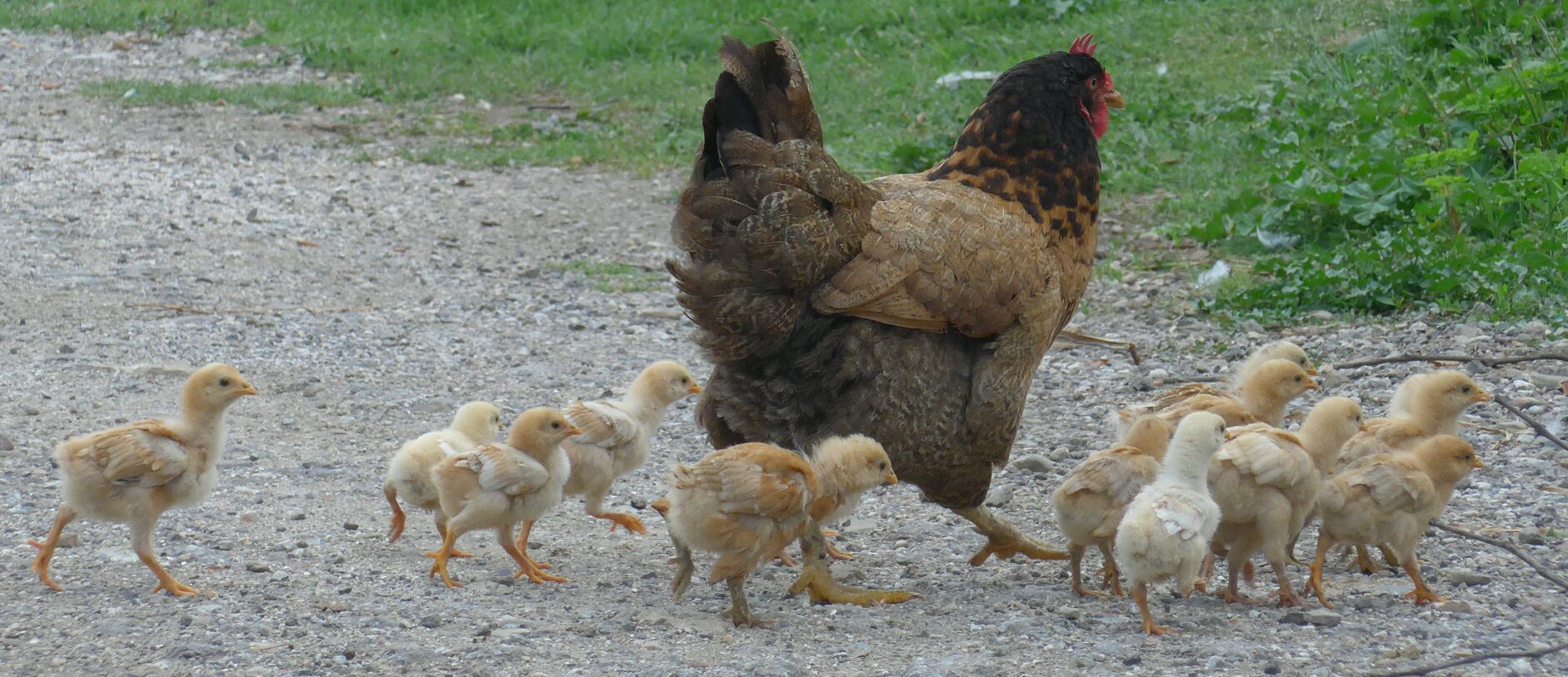
Why did the chicken cross the road?